
Powder Coating in Hobart
Got a rusty boat trailer, a set of old lacework panels, a balustrade that has started to bubble or a batch of brackets to finish? Tell us what it is, roughly how big, and the colour you want. We'll pass your enquiry to one independent powder coater in the Hobart area, who can quote.
Hobart Powder Coating is an enquiry and referral service. We don't run a workshop or coat anything ourselves. With your consent, your details go to one local business, and that business confirms the preparation, price, colour and timing directly with you.
- Free, no-obligation enquiry
- Passed to one local business, not a list
- Honest about what we are: a referral service
Free, no-obligation enquiry. Include your suburb, what's happening and photos if you can.
Prefer email? Write to hello@hobartpowdercoating.com.au.
Tell us about your job
Services you can enquire about
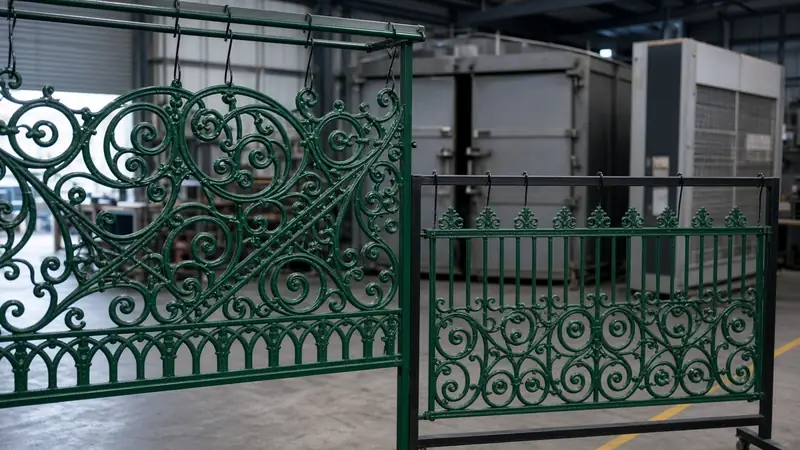
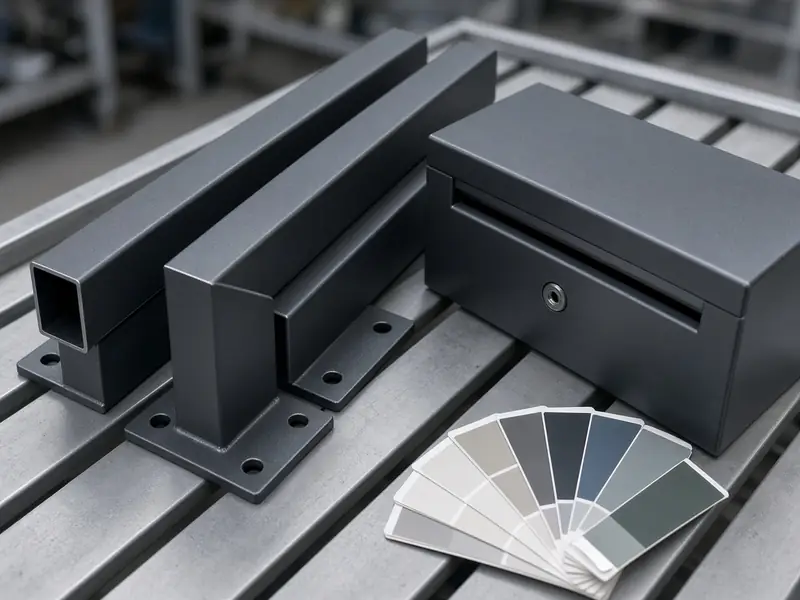
Why powder coat at all?
Powder coating gives metal a baked-on finish that is thicker and more even than most brush or spray paints. A dry powder of resin and pigment is applied electrostatically to clean, pre-treated metal, then cured in an oven until it flows into a hard film. There are no solvents to flash off. The result resists knocks, scratches and sun well, which is why it is the standard finish on aluminium windows, pool fences and outdoor furniture.
It has limits. Powder can't be applied on site, because the item has to go in an oven. It also won't hold on rust, grease or flaking paint. Dulux Powders calls the idea that powder can be applied over rusty metal a myth: rust has to come off first. Most of a good job is preparation.
Hobart jobs we take enquiries for
- Sandblasting and abrasive blasting: taking rusty or painted steel back to clean metal, from boat trailers to machinery and old gates.
- Wheel and rim powder coating: alloy and steel wheels for cars, 4WDs, trailers, caravans and motorbikes.
- Gates, fences and balustrades: driveway gates, pool fencing, stair rails and balcony balustrades, new or refinished.
- Industrial and commercial coating: batches and specified work for fabricators and builders in Glenorchy, Derwent Park, Moonah, Cambridge, Brighton and Kingston.
- Restoration, strip and recoat: heritage lacework, verandah brackets, outdoor settings, motorbike frames and anything with a failing finish.
- Colours and finishes: heritage colours, roofing-matched tones, textures, metallics and clear coats.
Not sure which fits? Pick "Not sure yet" on the form and describe the item.
Hobart's climate and your finish
Hobart is gentler on metal than an exposed surf coast, but it isn't uniform. The Galvanizers Association of Australia's corrosivity guide, based on AS 4312 and AS/NZS 2312.2, lists Hobart's suburbs among places where the mild C2 category can reach to within about 1 km of quiet, sheltered water. Right on the foreshore it is a different story. Within about 50 m of sheltered water, such as the Derwent at Sandy Bay, Bellerive, Lindisfarne or Kingston Beach, the guide puts sites in C4. Open-ocean surf beaches such as Clifton Beach are harsher again: C5 within about 200 m.
Damp is the other local factor. Shaded, south-facing yards on the slopes of kunanyi / Mount Wellington, and gardens in the Huon and Channel, stay wet for long periods. Moisture sitting in a chip or at a weld is how coatings fail from underneath. Tell the coater where the item will live. It decides whether a primer, galvanising or a higher-durability powder is worth it.
How it works
- Fill in the form with your suburb, what the items are, sizes, quantity, the metal if known, the current finish and photos.
- We receive your enquiry at hello@hobartpowdercoating.com.au. If you ticked the consent box, we pass it to one independent Hobart-area powder coater.
- The coater gets in touch to talk through preparation, colour, drop-off or collection, price and turnaround.
- You choose whether to go ahead. The agreement is between you and that business. We don't set prices or do the work.
This site is form-only, with no phone line. A written enquiry with photos is usually all a coater needs to give a first price. See how it works for the details and the cost guide for what drives a quote.
Before you drop anything off
- Take off rubber, plastic, timber, glass, bearings, seals, motors and electrics where you can. They won't survive the oven.
- Don't sand, scrape or blast old paint yourself, especially on anything painted before about 1970. It may contain lead.
- Photograph hardware and fixings before you take them apart, so it all goes back together.
- Note any threads, holes or machined faces that must stay bare.
Frequently asked questions
Are you a powder coating company?
No. Hobart Powder Coating is a referral service. With your consent we pass your enquiry to one independent local powder coater, who quotes and carries out any work you agree to. See how it works.
Can heritage cast-iron lacework be powder coated?
Often, yes. It is a common restoration job, but old lacework usually carries layers of paint that may contain lead, and cast iron can be brittle. The business will assess, test and choose a stripping method before coating. See strip and recoat.
Do I have to bring the item to the workshop?
Yes, or arrange for it to be collected. Powder coating needs an oven, so it can't be done in place. Some Hobart businesses offer pick-up, delivery or removal and refitting. Ask when they contact you.
What metals can be powder coated?
Mild steel, galvanised steel, aluminium, cast iron and stainless steel are all commonly coated, as long as the item can handle the curing temperature. Galvanised steel and cast iron need specific preparation.
Is powder coating more expensive than painting?
It depends on the item and the preparation. Powder usually lasts much longer than paint on metal that can go in the oven, so it can work out cheaper over time. Ask for a quote, and see the cost guide.